Changing suppliers for a manufactured product is never as simple as it looks from the outside. The comparison feels straightforward — Factory B offers a lower unit price than Factory A, so the math seems obvious. What that calculation usually leaves out is the full set of costs involved in re-establishing a production relationship: tooling that may not transfer, certifications that need to be reacquired, samples that need to be evaluated again, and the time cost of a transition period where production risk is higher than normal. For stainless steel water bottles, where the product looks simple but the quality variables are numerous, the hidden costs of a supplier switch are substantial enough to change the economics of the decision.
The mold question: who actually owns the tooling
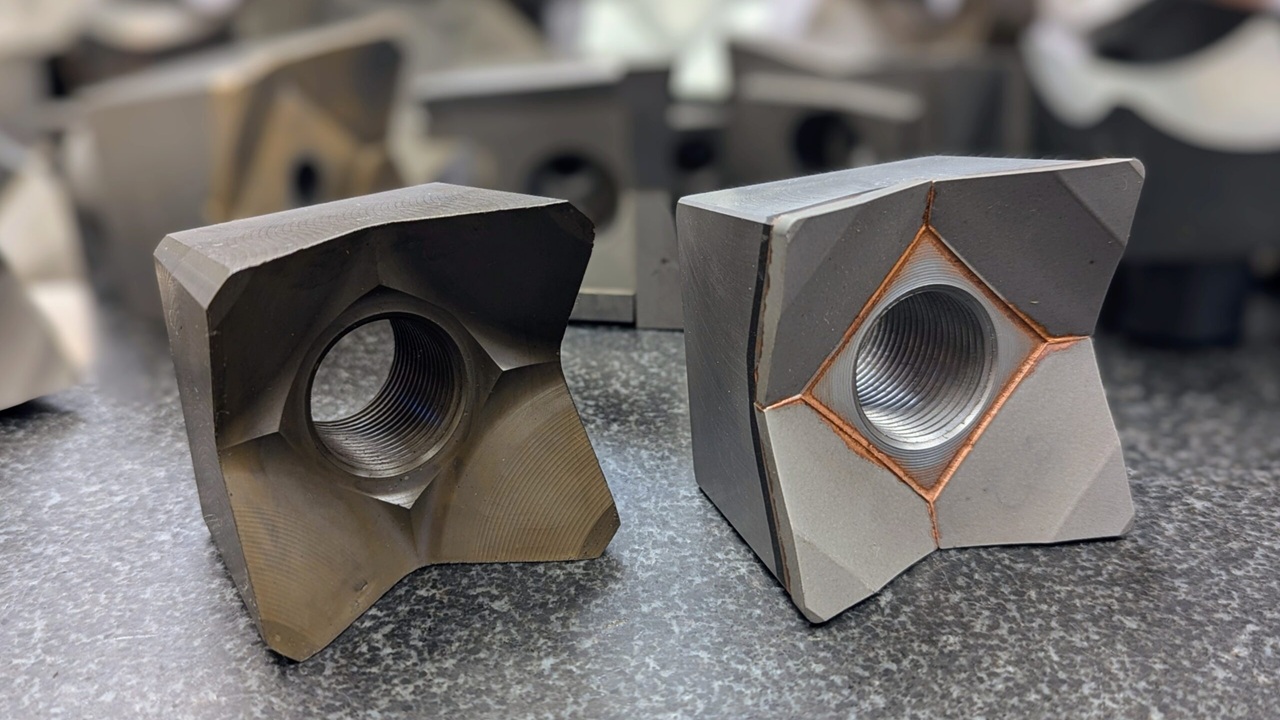
Custom molds — for lids, for body forming tools specific to a particular shape, for silicone gaskets with a branded profile — are often paid for by the buyer as a one-time tooling fee at the start of the production relationship. The question of who owns those molds is not always clearly addressed in the initial agreement, and it becomes the first major friction point when a buyer decides to change suppliers.
In practice, molds sit in the factory that made them. Even when the purchase order specifies that tooling is buyer-owned, extracting molds from a factory that no longer has an active production relationship with the buyer is difficult. Factories are not enthusiastic about releasing tooling to a competitor, and even when they comply, the logistics of shipping precision forming tools internationally, verifying they arrive undamaged, and qualifying them at a new factory introduces weeks of delay and additional cost.
The more common outcome is that a buyer switching suppliers effectively abandons their existing tooling — it stays at the original factory, unused — and pays new tooling fees at the new supplier to recreate equivalent molds. For a simple product, this might be a few hundred dollars. For a lid assembly with multiple custom-profiled components, it can run several thousand, with a re-qualification process that takes four to eight weeks before production quantities can be confirmed.
Certifications don’t transfer
Food-contact compliance testing — FDA, LFGB, California Prop 65 for lead and cadmium — is specific to the product as manufactured at a specific facility using specific materials. A product that holds valid food safety certifications at Factory A does not carry those certifications when produced at Factory B, even if Factory B uses nominally identical materials and processes.
For buyers selling into regulated retail channels — grocery chains, sporting goods retailers with vendor compliance requirements, branded corporate merchandise programs — this means every certification needs to be reacquired after a supplier switch. Test lead times from accredited laboratories run three to six weeks for standard food-contact testing. If the new factory’s materials don’t pass on the first submission — which is not unusual when a factory is unfamiliar with the specific regulatory thresholds being tested against — the timeline extends further.
This certification re-acquisition cost is both a time cost and a cash cost. Lab fees for a standard food-contact certification package for a stainless steel bottle typically run $500-$1,500 depending on the scope of testing and the accreditation standard. That’s not a large number on its own, but combined with tooling costs and sampling time, it becomes a significant fraction of the supposed unit price savings that motivated the switch.
The sampling process starts over
When working with an established stainless steel water bottle manufacturer, buyers benefit from a production baseline — the factory knows what the buyer expects, what prior QC failures looked like, and what specific quality points matter most to the buyer. A new factory has none of that accumulated context. The first production samples from a new supplier often have issues that wouldn’t appear from an established supplier, because the new factory is working from spec sheets rather than from a history of feedback.
Working through the sample qualification process with a new supplier typically takes three to five sample rounds before production quality meets buyer expectations — each round requiring a few weeks for manufacturing and shipping, plus review time. At four weeks per round and four rounds, that’s four months from first contact to approved production sample. During this period, the buyer is either running down existing inventory or maintaining the existing supplier relationship to keep supply flowing — either of which has a cost.
The transition period risk
The highest-cost period in a supplier switch is the transition itself, when the new supplier is in early production and the quality consistency is not yet established. Stainless steel water bottle production quality varies more in early production runs at a new factory than in later runs, for a simple reason: the factory’s operators are learning the buyer’s specific tolerances, the quality control team is calibrating to what matters to this particular buyer, and the occasional deviation that would have been caught and corrected by an experienced line hasn’t been learned yet.
This translates to higher defect rates, more frequent need for rework, and occasionally a production run that needs to be rejected — all during the period when the buyer has just moved their volume and is most dependent on the new factory performing correctly. Having a reserve of finished goods from the old supplier to cover potential delays or quality issues during the transition is the most common risk mitigation, but it requires capital to hold that buffer inventory while the new relationship is being established.
When the switch actually makes sense
None of this means supplier changes are never justified. The calculus changes when the existing supplier has a structural problem — quality that has been deteriorating, capacity constraints that mean orders aren’t being prioritized, pricing that has escalated beyond market rates — rather than simply a unit price that looks higher than a competitor’s quote.
It also changes when the new supplier offers a genuinely differentiated product capability that the existing supplier cannot match — a surface finish, a lid mechanism, a material source that the existing factory doesn’t have access to. In that case, the transition cost is the price of accessing a capability, not just the price of saving a few cents per unit.
The worst version of the calculation is switching suppliers for a small unit price reduction without accounting for tooling, certification, sampling, and transition risk costs. Done correctly, that calculation often shows that the per-unit savings over twelve months of production barely covers the one-time transition costs — which means the supplier switch needs to deliver sustained savings over multiple years, at consistent volume, to generate the return that justified it. That’s a different proposition than the initial unit price comparison suggests.
Keeping a secondary supplier qualified — going through the sampling and certification process once, and placing occasional small orders to maintain the relationship — is the approach that preserves optionality without paying the full cost of a primary supplier transition every time the market changes.